

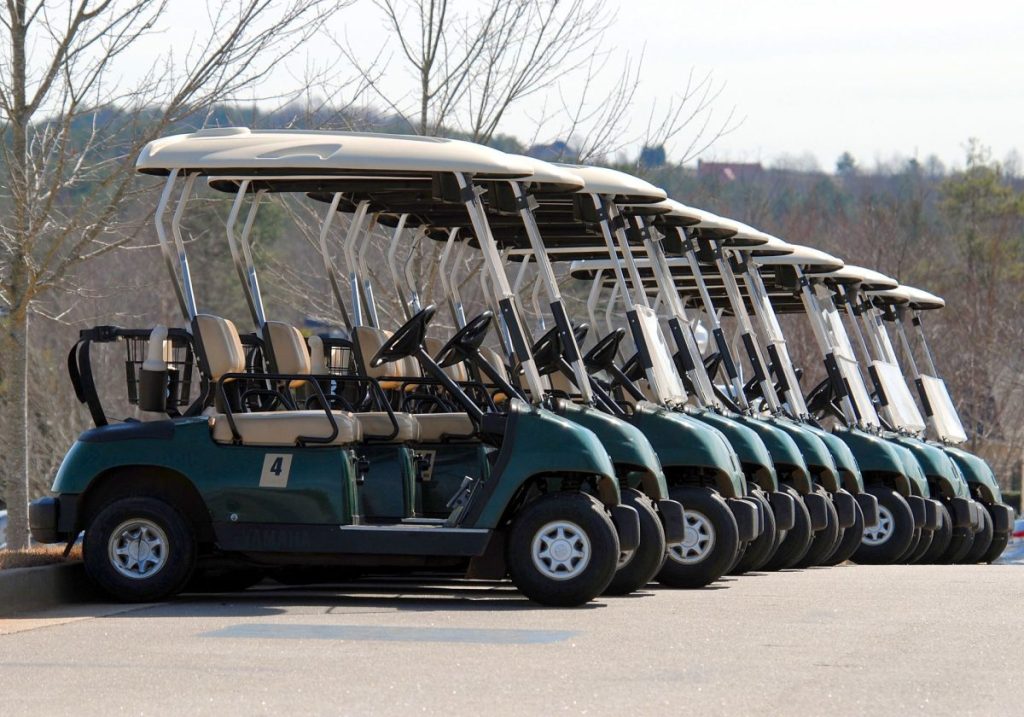
If you manage a fleet of golf carts in South Florida — whether for a resort, retirement community, or commercial operation — you already know that the subtropical climate doesn’t exactly go easy on your equipment. The heat, humidity, salt air, and year-round use create a perfect storm of wear and tear that can silently drain your maintenance budget if you’re not paying close attention to the right components.
One of the most overlooked yet critically important parts of any golf cart’s steering system is the tie rod. Small, relatively inexpensive, and easy to ignore — until it fails. Fleet managers across South Florida are discovering that proactively replacing worn tie rods isn’t just a smart maintenance move; it’s a significant budget-saving strategy that pays for itself many times over.
In this article, we’ll explore exactly why tie rods matter, what happens when they wear out, and how fleet operators in South Florida have dramatically cut their maintenance costs by staying ahead of this often-neglected component. We’ll also share insights from the team at South Florida Golf Carts, a trusted name in golf cart sales, service, and parts throughout the region.
Understanding the Role of Tie Rods in Golf Cart Steering
Before we dive into the financial benefits of proactive tie rod replacement, it’s important to understand what tie rods actually do. If you’re not a mechanic, the name alone might not tell you much — but their function is absolutely essential to safe and efficient operation.
What Are Tie Rods and How Do They Work?
Tie rods are the connecting links between the steering mechanism and the front wheels of a golf cart. When a driver turns the steering wheel, the force travels through the steering rack or box and is transmitted to the wheels via the tie rods. Essentially, they’re the mechanical translators that convert your steering input into actual wheel movement.
Each tie rod consists of two main parts: the inner tie rod end, which connects to the steering rack, and the outer tie rod end, which connects to the wheel hub assembly. Together, they form a precise mechanical linkage that keeps your wheels properly aligned and responsive to driver input.
Why Tie Rods Wear Out Over Time
Tie rods are built to last, but they’re not indestructible. Several factors contribute to their gradual wear and eventual failure:
Constant movement and stress: Every time the cart turns, the tie rods flex and pivot. Over thousands of hours of operation, this repetitive motion causes wear at the joint surfaces and ball socket connections.
Exposure to the elements: In South Florida specifically, the combination of salt air from the coast, intense UV radiation, and high humidity accelerates corrosion and degrades the protective boots that cover tie rod ends. Once those boots crack or tear, contaminants enter the joint and wear accelerates dramatically.
Rough terrain and impact loads: Golf carts don’t always stick to smooth fairways. Curbs, speed bumps, potholes, and uneven ground all transmit shock loads through the tie rods, gradually loosening the joints and increasing play in the steering system.
Heavy payload and continuous use: Commercial and resort fleets often carry heavy loads and operate far more hours per year than a private owner’s cart. This accelerated usage means tie rods reach the end of their service life much sooner.
The Hidden Costs of Ignoring Worn Tie Rods
Here’s where things get interesting — and expensive. Many fleet managers focus on obvious maintenance items like batteries, tires, and brakes, while tie rods quietly deteriorate in the background. The problem is that worn tie rods don’t just cause a single, isolated problem. They create a cascading chain of issues that compounds costs across your entire fleet.
Accelerated Tire Wear: The Silent Budget Killer
When tie rods wear out, the wheel alignment drifts out of specification. Even a small misalignment — sometimes just a degree or two — causes tires to scrub sideways as they roll forward. This creates uneven wear patterns that dramatically shorten tire life.
In a fleet setting, tires are one of the most significant recurring expenses. A set of quality golf cart tires can cost anywhere from $150 to $400 or more, depending on the size and type. If worn tie rods are causing your tires to wear out 30–50% faster than they should, you’re essentially throwing money away every single month.
“We had one community in Boca Raton that was going through tire sets every 18 months on their fleet. After we inspected their carts, we found that nearly every vehicle had worn tie rod ends causing toe misalignment. Once we replaced them and performed proper alignments, their tire life extended to nearly three years. The savings were remarkable.” — Service Team, South Florida Golf Carts
Steering Component Damage and Cascading Repairs
A worn tie rod doesn’t just affect alignment — it puts abnormal stress on every connected component. When there’s excessive play in the tie rod ends, the steering rack, steering column, and wheel bearings all experience increased vibration and irregular loading. Over time, this accelerates wear on these more expensive components.
Replacing a set of tie rod ends might cost a fraction of the price of a steering rack replacement or a wheel bearing service. But if you ignore the tie rods long enough, you’ll end up paying for all three — plus the labor to diagnose and repair the cascading damage.
Safety Incidents and Liability Exposure
This is the one that fleet managers often don’t think about until it’s too late. Severely worn tie rods can cause sudden, unpredictable steering behavior. In extreme cases, a tie rod end can separate entirely, causing the driver to lose steering control.
In a resort or retirement community setting, a steering failure could injure a guest, resident, or employee. Beyond the human cost — which is obviously the primary concern — the liability exposure from a single incident could dwarf years of proactive maintenance spending. South Florida’s legal environment is particularly active when it comes to personal injury claims, making this a very real financial risk for fleet operators.
Increased Driver Complaints and Downtime
As tie rods wear, drivers notice it long before the component actually fails. Vague, wandering steering, pulling to one side, and a loose feeling in the wheel are all early warning signs. These complaints lead to carts being pulled from service for inspection, creating operational gaps that affect customer satisfaction and service delivery.
In a busy resort or golf course environment, having multiple carts out of service at once can directly impact revenue. Proactive maintenance keeps carts in service longer and reduces the frequency of unexpected downtime.
Real-World Fleet Savings: How South Florida Operators Turned Things Around
The numbers tell a compelling story. Let’s look at how fleet operators across South Florida have experienced real, measurable savings by implementing proactive tie rod inspection and replacement programs.
Case Study: A Retirement Community in Palm Beach County
A large retirement community in Palm Beach County operated a fleet of 45 golf carts for resident use. For years, their maintenance approach was purely reactive — fix it when it breaks. Their annual maintenance budget was consistently running over projections, and they couldn’t figure out why.
When they partnered with South Florida Golf Carts for a comprehensive fleet inspection, the results were eye-opening. Of the 45 carts inspected, 32 had tie rod ends showing significant wear. Eighteen of those were in a condition that qualified as unsafe for continued operation without immediate repair.
The community invested in a complete tie rod replacement program across the fleet, along with wheel alignments on every cart. The total cost was significant upfront, but what happened next changed their entire approach to fleet maintenance:
In the 12 months following the tie rod replacement program, their tire replacement costs dropped by 42%. Steering-related repair orders decreased by 67%. Driver complaints about handling issues fell to near zero. And most importantly, they had zero steering-related safety incidents compared to three minor incidents in the previous year.
The total savings in the first year alone more than covered the cost of the initial tie rod replacement program — and the benefits continued to compound in subsequent years as the fleet remained in better overall condition.
Case Study: A Golf Course in Broward County
A private golf club in Broward County faced a different challenge. Their fleet of 80 carts was aging, and they were considering a full fleet replacement at significant capital expense. Before pulling the trigger on that investment, they brought in South Florida Golf Carts for a detailed assessment.
The assessment revealed that while the carts were indeed showing their age, many of the handling and performance issues were attributable to worn steering components — primarily tie rod ends — rather than fundamental mechanical failure. The club decided to invest in a targeted refurbishment program that included tie rod replacement, alignment, and a few other targeted repairs.
The result? They extended the usable life of their fleet by an estimated two to three years, deferring a capital investment of several hundred thousand dollars. The refurbishment program cost a fraction of fleet replacement and delivered carts that performed noticeably better than they had in years.
“It’s one of the most satisfying conversations we have with fleet managers — when they realize that what they thought was a failing fleet was actually a fleet with a few specific, fixable problems. Tie rods are almost always part of that conversation.” — South Florida Golf Carts Fleet Services Team
How to Identify Worn Tie Rods in Your Fleet
You don’t need to be a master mechanic to spot the early warning signs of tie rod wear. Training your drivers and maintenance staff to recognize these symptoms can help you catch problems early, before they escalate into costly repairs or safety incidents.
Driver-Reported Warning Signs
Drivers are often the first to notice when something isn’t right with steering. Encourage your team to report any of the following symptoms promptly:
Loose or vague steering feel: If the steering wheel has more play than usual before the wheels respond, this is a classic sign of worn tie rod ends. The ball joints inside the tie rod end have excessive clearance, creating a “dead zone” in the steering response.
Pulling to one side: A cart that consistently drifts left or right without driver input may have a tie rod issue causing wheel misalignment. While other factors can cause pulling, tie rod wear is a common culprit.
Vibration or shimmy: Worn tie rods can cause the front wheels to oscillate or shimmy, particularly at certain speeds. This vibration is often felt through the steering wheel and can be unsettling for drivers and passengers.
Uneven tire wear: If you notice that tires are wearing faster on the inside or outside edge, or showing a feathered wear pattern, misalignment from worn tie rods is a likely cause.
Physical Inspection Techniques
For maintenance staff performing regular inspections, a hands-on check of the tie rod ends should be part of every routine service. Here’s how to do it:
The shake test: With the cart safely supported and the front wheels off the ground, grasp the tire at the 9 o’clock and 3 o’clock positions and try to shake it from side to side. Any noticeable play or clunking indicates worn tie rod ends or wheel bearings.
Visual inspection of boots: Check the rubber boots that protect the tie rod end joints. Cracked, torn, or missing boots allow dirt and moisture to contaminate the joint, accelerating wear. If the boots are damaged, the joint inside should be inspected carefully.
Check for corrosion: In South Florida’s coastal environment, corrosion is a constant threat. Look for rust, pitting, or corrosion on the tie rod shafts and end fittings. Significant corrosion can weaken the component and make it prone to failure.
Alignment check: If you have access to alignment equipment or can use a simple string line method, checking toe alignment can reveal tie rod problems even before physical wear is obvious. Misalignment is often the first measurable symptom of developing tie rod wear.
Building a Proactive Tie Rod Maintenance Program for Your Fleet
The key to maximizing the budget benefits of tie rod maintenance isn’t just replacing them when they fail — it’s building a systematic program that catches wear before it becomes a problem. Here’s how to structure an effective program for your South Florida fleet.
Establishing Inspection Intervals
For most golf cart fleets in South Florida, a tie rod inspection should be performed at least every 500 operating hours or once per year — whichever comes first. For fleets operating in coastal areas with heavy salt air exposure, or those running on particularly rough terrain, consider shortening that interval to every 300 hours.
Document every inspection with a standardized checklist that includes the condition of tie rod ends, boots, alignment measurements, and any driver-reported symptoms. This creates a historical record that helps you predict when components are approaching the end of their service life.
Setting Replacement Thresholds
Not every worn tie rod needs immediate replacement — but having clear thresholds helps your team make consistent, objective decisions rather than subjective judgment calls. Work with your service provider to establish specific criteria for replacement, such as maximum allowable play in the joint, minimum boot condition requirements, and alignment tolerance limits.
South Florida Golf Carts can help fleet managers develop customized inspection checklists and replacement thresholds based on your specific fleet composition, usage patterns, and operating environment.
Batching Replacements for Cost Efficiency
One of the smartest strategies for fleet managers is batching tie rod replacements. Rather than replacing one cart’s tie rods at a time as they fail, plan periodic fleet-wide replacement cycles. This approach has several advantages:
Labor costs are reduced because technicians can work more efficiently when performing the same task across multiple vehicles in sequence. Parts can be purchased in bulk, often at better pricing. Downtime is minimized because you can schedule the work during off-peak periods rather than dealing with unexpected breakdowns during busy times. And your entire fleet is brought to the same maintenance baseline simultaneously, making future planning more predictable.
Partnering with a Trusted Local Service Provider
Managing a fleet maintenance program in-house is possible, but partnering with an experienced local service provider offers significant advantages — especially for smaller operations that don’t have dedicated maintenance staff.
South Florida Golf Carts offers fleet service programs specifically designed for commercial and community golf cart operators throughout Miami-Dade, Broward, and Palm Beach counties. Their team understands the specific challenges of operating golf cart fleets in South Florida’s climate and can provide both the expertise and the parts needed to keep your fleet running efficiently.
“We’ve seen what happens when fleet maintenance gets deferred — it always costs more in the end. Our goal is to help fleet managers get ahead of these issues so they’re not constantly reacting to breakdowns. Tie rods are one of the highest-value maintenance items we address because the downstream savings are so significant.” — South Florida Golf Carts
The Financial Math: Calculating Your Potential Savings
Let’s put some concrete numbers around the potential savings from a proactive tie rod program. Every fleet is different, but this framework can help you estimate the return on investment for your specific situation.
Estimating Tire Savings
Start by looking at your current tire replacement frequency. If you’re replacing tires every 18–24 months and you suspect alignment issues from worn tie rods, a realistic expectation after correction is 30–48 months between replacements. For a fleet of 30 carts with tires averaging $250 per set, that’s:
Current cost: 30 carts × $250 × (1 replacement every 18 months) = $5,000 per year in tire costs. After correction: 30 carts × $250 × (1 replacement every 36 months) = $2,500 per year. Annual savings: $2,500 — just from tires alone.
Estimating Avoided Repair Costs
Consider the cost of repairs that worn tie rods can cause or accelerate: steering rack replacement ($300–$600 per cart), wheel bearing replacement ($150–$300 per cart), and associated labor costs. If proactive tie rod maintenance prevents even two or three of these repairs per year across your fleet, the savings quickly add up to thousands of dollars annually.
Estimating Downtime Costs
For revenue-generating fleets — resort rentals, golf courses, or transportation operations — downtime has a direct dollar cost. Calculate your revenue per cart per day and multiply by the number of unplanned downtime days you’ve experienced due to steering issues. Even conservative estimates often reveal that downtime costs exceed the cost of the maintenance that would have prevented it.
Why South Florida’s Climate Makes This Even More Important
It’s worth emphasizing one more time that South Florida’s environment is uniquely harsh on golf cart components. Fleet operators who manage carts in other parts of the country may be able to get away with longer inspection intervals and less aggressive replacement schedules. In South Florida, that approach is a recipe for accelerated wear and higher costs.
The combination of year-round operation (no winter downtime for maintenance), coastal salt air that accelerates corrosion, intense UV radiation that degrades rubber components like tie rod boots, and high humidity that promotes rust and moisture intrusion all work together to shorten the service life of steering components compared to other regions.
This isn’t a reason to despair — it’s simply a reason to be more proactive. Fleet operators who understand their environment and plan accordingly consistently outperform those who apply a one-size-fits-all maintenance approach borrowed from cooler, drier climates.
Getting Started with Your Fleet’s Tie Rod Assessment
If you manage a golf cart fleet in South Florida and you’re not sure about the current condition of your tie rods, the best first step is a comprehensive fleet inspection. This gives you a clear baseline from which to build your maintenance program.
South Florida Golf Carts offers fleet assessments for commercial and community operators throughout the region. Their experienced technicians will inspect each cart’s steering components, document findings, and provide a prioritized action plan based on the condition of your fleet. This takes the guesswork out of maintenance planning and gives you the data you need to make informed budget decisions.
Whether you’re managing 10 carts or 100, the principles are the same: proactive maintenance of critical components like tie rods consistently delivers better performance, lower long-term costs, and safer operation than a reactive, fix-it-when-it-breaks approach.
Conclusion: Small Parts, Big Impact on Your Maintenance Budget
Tie rods might not be the most glamorous topic in fleet management, but they’re one of the highest-leverage maintenance items you can address. The evidence from fleet operators across South Florida is clear: proactive tie rod inspection and replacement pays for itself many times over through extended tire life, avoided cascading repairs, reduced downtime, and eliminated safety risks.
The fleet managers who are winning the maintenance budget battle in South Florida aren’t necessarily spending more money — they’re spending it smarter. They’re identifying the components that have the greatest downstream impact and making sure those components are always in good condition. Tie rods consistently rank at the top of that list.
If you’re ready to take a more strategic approach to your fleet’s steering maintenance, reach out to South Florida Golf Carts. Their team has the expertise, the parts, and the local knowledge to help you build a maintenance program that keeps your fleet running safely and efficiently — while keeping your budget under control.
Don’t wait for a steering failure to tell you it’s time to act. The best time to inspect your tie rods was last year. The second-best time is today.