

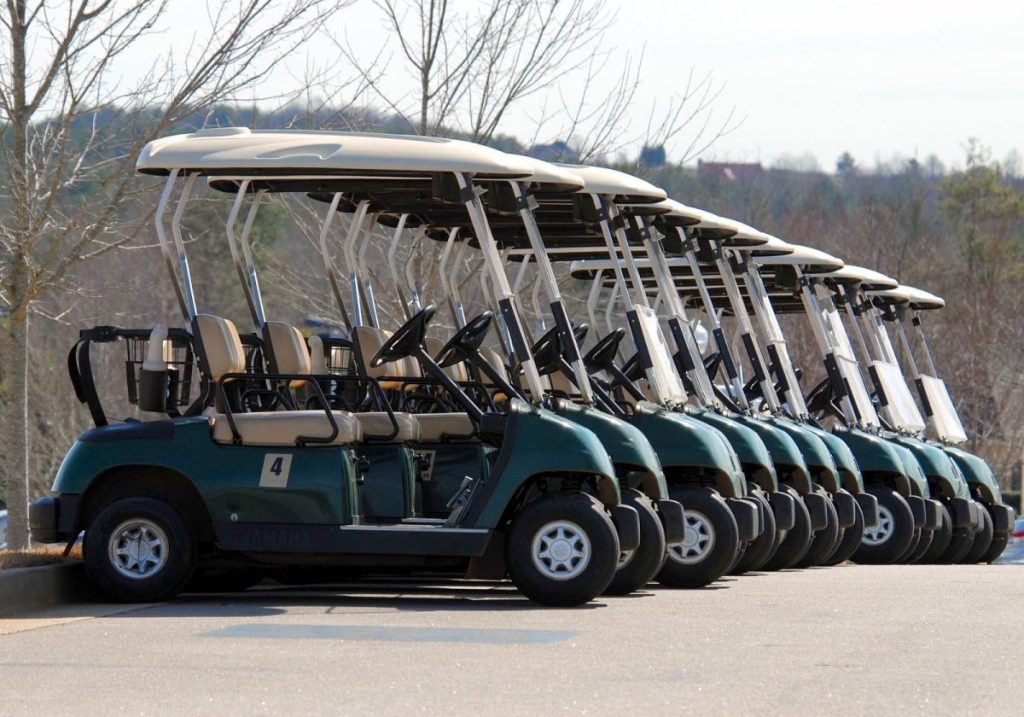
If you’ve spent any time navigating the golf courses, retirement communities, or beachside neighborhoods of South Florida, you already know how hard golf carts work down here. Between the salt air rolling in off the Atlantic, the relentless humidity, and the daily grind of flat but unforgiving pavement, golf cart components take a beating that drivers in cooler, drier climates simply don’t experience. And few components suffer quite as quietly — or as expensively — as the steering box.
Over the past five years, the team at South Florida Golf Carts has tracked, documented, and analyzed steering box failures across hundreds of units serviced throughout Miami-Dade, Broward, and Palm Beach counties. What we found was both surprising and actionable. The majority of catastrophic steering failures didn’t happen suddenly. They were telegraphed weeks or even months in advance — and most of them could have been completely avoided with timely, targeted maintenance.
This article breaks down what we learned, which failure types are most preventable, and exactly what you should be doing right now to protect your investment and your safety.
Understanding the Golf Cart Steering Box: A Quick Primer
Before diving into the data, it helps to understand what a steering box actually does. The steering box — sometimes called a steering gear box — is the mechanical heart of your cart’s steering system. It translates the rotational motion of your steering wheel into the lateral motion that turns your front wheels. It’s a precision component that relies on tight tolerances, proper lubrication, and structural integrity to function correctly.
In most golf carts, the steering box is a rack-and-pinion or worm-gear style unit. Both designs are relatively robust when properly maintained, but both are also vulnerable to the same enemies: contamination, lubrication failure, wear, and corrosion.
In South Florida’s environment specifically, corrosion is an accelerant. The salt-laden air that makes living here so beautiful is absolutely brutal on metal components. A steering box that might last 10 years in a dry inland climate can degrade significantly faster here without proper care.
How the 5-Year Study Was Conducted
Our field study wasn’t a laboratory experiment — it was real-world documentation drawn from actual service records. Between 2019 and 2024, our technicians at South Florida Golf Carts logged detailed notes on every steering-related repair and service call. We tracked the make and model of each cart, the age of the unit, the owner’s reported maintenance history, the environmental conditions of the cart’s primary location (coastal, inland, covered storage vs. open air), and the specific nature of the steering box failure.
In total, we analyzed data from 412 steering-related service events. Of those, 287 involved some degree of steering box damage or failure. The remaining 125 were related to tie rods, steering columns, or wheel alignment issues — which we’ll touch on briefly but which fall outside the core scope of this study.
We categorized steering box failures into five primary types and then evaluated each type based on two criteria: frequency and preventability. The results were eye-opening.
The Five Most Common Steering Box Failure Types in South Florida
1. Lubrication Failure and Dry Gear Wear
This was, by a significant margin, the most common cause of steering box damage we documented — accounting for 38% of all steering box failures in our study. Lubrication failure occurs when the grease or gear oil inside the steering box breaks down, dries out, or is never replenished. Without adequate lubrication, the metal gears grind against each other, creating friction that accelerates wear and eventually leads to slop, binding, or complete failure.
In South Florida’s heat, lubricants degrade faster than manufacturers’ general recommendations account for. A cart stored outdoors in Boca Raton or Pompano Beach experiences dramatically higher temperatures than one stored in a garage in Minnesota. Thermal cycling — the daily expansion and contraction of components as temperatures rise and fall — also contributes to lubricant migration, where grease slowly works its way out of the housing over time.
“Nearly four out of ten steering box failures we saw could have been prevented with a simple lubrication service every 12 to 18 months. It’s one of the least expensive maintenance tasks and one of the most impactful.” — South Florida Golf Carts Service Team
The good news: lubrication failure is among the most preventable failure types. It requires no special tools and relatively little expense. A proper lubrication service involves inspecting the steering box housing for cracks or seal damage, flushing old lubricant if contaminated, and repacking with the appropriate grade of grease or gear oil for your specific unit.
2. Corrosion-Induced Housing Damage
Coming in at 24% of all steering box failures, corrosion-induced housing damage is the failure type most uniquely tied to South Florida’s coastal environment. Salt air doesn’t just attack the exterior of your cart — it works its way into every crevice, including the seams and vent ports of the steering box housing. Once moisture and salt infiltrate the housing, they begin attacking the internal components, degrading gear surfaces and eventually compromising the structural integrity of the housing itself.
We found this type of failure to be significantly more common in carts stored within two miles of the ocean, which covers a substantial portion of South Florida’s golf cart population. Communities in Hollywood Beach, Deerfield Beach, Key Biscayne, and similar coastal areas showed a corrosion failure rate nearly double that of inland communities like Weston or Coral Springs.
Preventability rating: Moderate to High. While you can’t change the environment, you can apply corrosion inhibitors to the exterior of the steering box, ensure housing seals are intact, and schedule more frequent inspections if your cart lives near the water. Catching early-stage corrosion before it penetrates to internal components is the key difference between a $150 treatment and a $600 replacement.
3. Impact Damage from Curbs and Road Hazards
At 19% of documented failures, impact damage ranked third — and this one surprised us a bit. Many cart owners don’t realize that a hard hit against a curb, a pothole, or an unexpected drop off a cart path can transmit significant shock force directly to the steering box. Over time, repeated impacts cause micro-fractures in the housing, loosen mounting hardware, and knock internal components out of alignment.
South Florida’s golf cart communities often include shared pathways, parking areas, and roads with varying pavement quality. The flat terrain is generally forgiving, but cart paths near beach communities can have drainage grates, speed bumps, and sandy shoulders that catch drivers off guard.
This failure type is partially preventable. Drivers can be more mindful of curbs and obstacles, and technicians can inspect mounting hardware and check for housing cracks during routine service. However, accidents happen, and some degree of impact damage is inevitable over the life of a cart.
4. Seal Failure and Contamination
Accounting for 12% of failures, seal failure is closely related to both lubrication failure and corrosion damage but deserves its own category. The seals on a steering box serve a dual purpose: they keep lubricant in and contaminants out. When seals degrade — due to age, UV exposure, or chemical contact — both functions are compromised simultaneously. Lubricant leaks out while dirt, moisture, and debris work their way in.
South Florida’s intense UV radiation accelerates rubber seal degradation faster than in most other regions. A seal that might last six or seven years in a northern climate can begin cracking and losing elasticity in three to four years here. We documented numerous cases where seal failure led to a cascade of secondary damage — contaminated gear oil, accelerated wear, and eventual housing corrosion — all stemming from a seal that would have cost less than $20 to replace at the first sign of cracking.
5. Worn or Stripped Gear Teeth
The fifth major failure type, worn or stripped gear teeth, accounted for 7% of cases and was the failure type most often associated with high-mileage carts that had otherwise been reasonably maintained. This type of failure is somewhat inevitable in aging units but can be significantly delayed through proper lubrication and by avoiding the high-load situations that accelerate gear wear — such as overloading the cart, aggressive steering at low speeds, and ignoring early warning signs like increased steering play.
Interestingly, we found that carts with documented maintenance histories showed gear tooth wear at rates roughly 40% lower than carts with no maintenance records, even when controlling for age and mileage. This strongly suggests that consistent maintenance extends gear life substantially.
The Preventability Breakdown: What the Numbers Really Tell Us
When we applied our preventability analysis to the five failure categories, the findings were striking. Of the 287 steering box failures we documented, we assessed 189 of them — or approximately 66% — as being either fully preventable or significantly delayable through early maintenance intervention.
Here’s how that breaks down by category:
Fully Preventable Failures
Lubrication failures and seal failures together accounted for 50% of all cases and were classified as fully preventable in the vast majority of instances. These are failures that simply should not happen to a properly maintained cart. They occur almost exclusively in carts that have either never been serviced or have gone years between service intervals.
Significantly Delayable Failures
Corrosion-induced housing damage and gear tooth wear were classified as significantly delayable. You may not be able to prevent corrosion entirely in a coastal environment, but you can slow it dramatically. Similarly, gear wear is a fact of life in any mechanical system, but proper lubrication and load management can extend gear life by years.
Partially Preventable Failures
Impact damage was the only category we classified as only partially preventable, given that some accidents are simply unavoidable. However, even here, regular inspections that catch early-stage impact damage — before micro-fractures propagate or mounting hardware loosens significantly — can prevent minor damage from becoming catastrophic failure.
Early Warning Signs Every Golf Cart Owner Should Know
One of the most valuable takeaways from our five-year study was identifying the early warning signs that reliably preceded steering box failure. In the majority of preventable failure cases, the cart owner reported noticing at least one of the following symptoms weeks or months before the failure occurred — but either dismissed it or delayed scheduling service.
Increased Steering Play or Looseness
If your steering wheel feels looser than usual — meaning you can turn it slightly in either direction before the wheels begin to respond — this is a classic early sign of internal wear or loosening hardware. A small amount of play is normal, but any noticeable increase from your cart’s baseline should prompt an inspection.
Stiff or Binding Steering
Difficulty turning the wheel, especially at low speeds or when the cart is stationary, often indicates lubrication failure or the early stages of corrosion-related binding. Don’t dismiss this as “just the way the cart feels” — it’s a direct communication from your steering system that something is wrong.
Unusual Noises When Turning
Clicking, grinding, or clunking sounds when turning the wheel are red flags. Clicking often indicates worn gear teeth or debris in the housing. Grinding suggests metal-on-metal contact due to lubrication failure. Clunking can indicate loose mounting hardware or a cracked housing.
Visible Grease or Oil Leaks
If you notice grease or oil residue on or around the steering box housing, your seals have likely failed. This is one of the easiest early warning signs to catch during a simple visual inspection — and one of the cheapest to address before it becomes a bigger problem.
Uneven Tire Wear
While not exclusively a steering box symptom, uneven front tire wear can indicate that your steering geometry has been affected by internal steering box wear. If your tires are wearing faster on one side, have your alignment and steering system inspected together.
A South Florida-Specific Maintenance Schedule
Based on our five-year study findings and the specific environmental challenges of South Florida, we developed a maintenance schedule that goes beyond the generic recommendations in most owner’s manuals. These recommendations apply to golf carts used regularly in South Florida conditions.
Every 6 Months
Perform a visual inspection of the steering box housing, checking for cracks, corrosion spots, grease leaks, or loose mounting hardware. Apply a corrosion inhibitor spray to the exterior of the housing, particularly if your cart is stored within a few miles of the coast. Check steering play and note any changes from your baseline.
Every 12 Months
Have a qualified technician perform a full steering system inspection, including checking internal lubrication levels, inspecting seals for cracking or degradation, and verifying that all mounting hardware is properly torqued. This is also a good time to check tie rod ends and steering column connections.
Every 18 to 24 Months
Schedule a complete steering box service, including flushing and replacing lubricant, replacing seals if showing any signs of wear, and performing a comprehensive alignment check. Carts stored outdoors in coastal areas should lean toward the 18-month interval; carts stored in covered, climate-controlled environments can typically go 24 months.
After Any Significant Impact
If your cart takes a hard hit — curb strike, pothole, collision — have the steering system inspected before continuing regular use. Impact damage that isn’t caught early is one of the fastest paths to unexpected steering failure.
The Real Cost of Waiting: A Financial Perspective
We understand that maintenance costs money, and it can be tempting to defer service when your cart seems to be running fine. But the financial math of preventive maintenance versus reactive repair is overwhelmingly in favor of staying ahead of problems.
Based on our service records from the five-year study period, here’s a rough cost comparison for the most common failure scenarios:
Lubrication Service vs. Gear Replacement
A routine lubrication service at South Florida Golf Carts typically runs between $75 and $150 depending on the unit. A complete steering box replacement, which becomes necessary when lubrication failure is allowed to progress to gear damage, typically costs between $400 and $900 including parts and labor. That’s a potential savings of $250 to $750 from a single preventive service visit.
Seal Replacement vs. Housing Replacement
Replacing a degraded seal costs between $20 and $60 in parts, plus labor. Allowing seal failure to progress to housing damage and internal contamination can result in costs of $500 to $1,200 or more. The math isn’t complicated.
Corrosion Treatment vs. Full Steering Box Replacement
Applying corrosion inhibitor and addressing early-stage surface corrosion is a $50 to $100 service. Allowing corrosion to penetrate the housing and damage internal components leads to full replacement costs that frequently exceed $800.
“The carts that cost our customers the most money over time are almost never the ones that had a lot of maintenance done. They’re the ones that had none.” — South Florida Golf Carts Service Manager
Why South Florida Conditions Demand a Different Approach
It bears repeating: the standard maintenance recommendations that come with most golf carts were written with average conditions in mind. South Florida is not average. The combination of high heat, high humidity, salt air, intense UV radiation, and year-round use creates a maintenance environment that is genuinely more demanding than most other regions in the country.
Golf cart communities throughout Broward and Palm Beach counties often have carts running nearly every day of the year. There’s no winter storage period that gives components a rest. There’s no dry season that gives metal surfaces a break from moisture. The environment is relentless, and your maintenance approach needs to match that reality.
At South Florida Golf Carts, we’ve built our service protocols around these realities. We use lubricants rated for high-temperature performance, corrosion inhibitors formulated for marine-adjacent environments, and seal materials selected for UV resistance. These aren’t luxury upgrades — they’re appropriate tools for the environment.
What to Do Right Now If You Haven’t Serviced Your Steering System
If you’re reading this and realizing that your cart’s steering system hasn’t been inspected in over a year — or ever — here’s what we recommend you do today.
First, perform a quick self-inspection. Sit in your cart and gently rock the steering wheel back and forth. Note how much play there is before the wheels begin to move. Then take your cart for a short drive and pay close attention to how the steering feels and sounds. Any stiffness, looseness beyond what you’re used to, or unusual noises should be noted.
Second, look under the front of your cart at the steering box housing. You’re looking for visible cracks, rust spots, or any signs of grease leakage around the seams. This takes about two minutes and can tell you a lot.
Third, if you notice anything concerning — or if it’s simply been more than a year since your last service — call a qualified golf cart technician. The team at South Florida Golf Carts offers comprehensive steering system inspections and can assess your cart’s condition quickly and accurately.
Don’t wait for your steering to fail on a cart path or, worse, in traffic. Steering failure is a safety issue, not just a mechanical inconvenience. A cart that loses steering response unexpectedly can cause serious injury to the driver, passengers, and bystanders.
Final Thoughts: Maintenance Is an Investment, Not an Expense
The five years of field data we’ve collected tell a clear and consistent story: the vast majority of golf cart steering box failures in South Florida are preventable. They don’t happen because steering boxes are poorly designed or because golf carts are inherently unreliable. They happen because of deferred maintenance in an environment that demands more from your cart than most owners realize.
The good news is that the solution is straightforward. Regular inspections, timely lubrication services, seal replacement when needed, and corrosion protection appropriate for coastal living will keep most steering systems functioning reliably for the full life of the cart. The investment is modest. The return — in avoided repair costs, extended cart life, and personal safety — is substantial.
Whether you’re cruising through a Delray Beach retirement community, navigating the paths of a Coral Gables golf course, or running errands in a Fort Lauderdale beach neighborhood, your steering system deserves the same attention you’d give any critical safety component. Give it that attention, and it will serve you reliably for years to come.
For questions about your golf cart’s steering system or to schedule a service appointment, reach out to the team at South Florida Golf Carts. We’ve been serving South Florida’s golf cart community with expertise, transparency, and a genuine commitment to keeping you safe on the road.